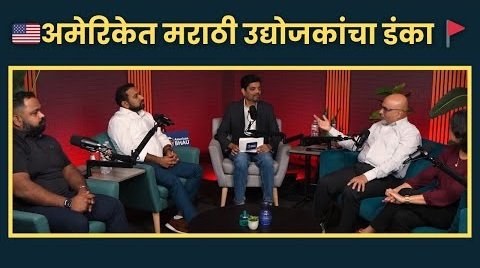
The American Bhau Podcast is known for bringing inspiring stories of resilience, vision, and entrepreneurship from the Marathi in USA and global communities. In one moving episode, host Rahul sits down with Ashok Deshmane, the founder of Snehwan, a non-profit organization in India dedicated to transforming the lives of children from drought-affected farming families.
This conversation dives deep into Deshmane’s personal struggles, his commitment to education, and the way Snehwan is building responsible citizens through innovative programs that blend compassion with entrepreneurship.
From a Farmer’s Son to a Changemaker
Ashok Deshmane’s story begins in a poor farming family, where financial hardship was a daily reality. He experienced firsthand the struggles faced by children in rural India, particularly those from drought-hit regions where education often takes a back seat to survival.
Rather than allowing his background to hold him back, Ashok turned it into his driving force. With determination and support from his wife, he founded Snehwan, a movement that provides not just shelter and education, but also holistic development for children who might otherwise be left behind.
The Birth of Snehwan
Starting a non-profit like Snehwan was anything but easy. On the American Bhau Podcast, Ashok described the challenges of building the organization:
- Financial Struggles – Funding was scarce in the early days, and both he and his wife made personal sacrifices to keep the mission alive.
- Societal Skepticism – Many questioned whether such an initiative could succeed, especially in rural India.
- Emotional Burden – Supporting dozens of children as a family required extraordinary patience, resilience, and faith.
Despite these hurdles, Ashok remained focused on his vision: to create an environment where children from farming families could not only survive but thrive as future leaders.
Education Beyond Textbooks
One of the highlights of the episode was Ashok’s explanation of how Snehwan goes beyond traditional education. Instead of focusing solely on academics, the organization emphasizes:
- Skill Development – Children engage in labs and workshops designed to teach practical, entrepreneurial skills.
- Entrepreneurship Training – Young learners are encouraged to think like problem-solvers and future business leaders.
- Holistic Growth – The focus is on character, responsibility, and values, ensuring children grow into responsible citizens.
This forward-looking approach bridges the gap between education and employability, preparing students not just for exams but for life.
Branding and Storytelling for Social Change
Running a non-profit also requires the same skills as running a small business—especially in areas like branding, digital marketing, and storytelling. Ashok highlighted how Snehwan’s story itself is its biggest strength.
By sharing the real struggles of drought-hit families and showcasing the transformation of children at Snehwan, the organization builds trust and attracts supporters. This is a perfect example of brand storytelling, where authenticity and impact create a powerful connection with donors, volunteers, and the larger community.
Through content marketing and social media marketing, Snehwan reaches a global audience, including Marathi in USA communities who are eager to support initiatives that uplift rural India.
Lessons in Entrepreneurship
Although Snehwan is a non-profit, Ashok approaches it with an entrepreneurial mindset:
- Problem-Solving Approach – Identifying a critical gap (access to quality education in farming families) and building a scalable solution.
- Innovation – Establishing labs, skill-building programs, and creative educational modules instead of relying on rote learning.
- Sustainability – Ensuring the organization can stand on its own through partnerships, community involvement, and diversified support.
- Leadership Development – Training children not just to study, but to lead in their future careers and communities.
These principles are as relevant to small businesses as they are to social enterprises.
The Human Side of Impact
What makes Ashok’s story so inspiring is the human element. He and his wife made personal sacrifices to keep Snehwan alive, showing that true leadership often comes from selflessness and service.
Listeners of the American Bhau Podcast will find themselves deeply moved by the authenticity of his journey—one that blends pain, hope, and perseverance into a story of transformation.
Inspiring the Global Marathi Community
For the Marathi in USA audience, Ashok’s journey is particularly powerful. It highlights how individuals from small villages in India can create global impact with vision, courage, and relentless effort.
It also serves as a reminder that while many Marathi professionals abroad build small businesses or careers in entrepreneurship, digital marketing, and branding, there is also space to give back and create meaningful change in society.
How to Support Snehwan
Ashok ended the conversation with a call to action: Snehwan is not just his dream—it’s a collective mission. He encouraged people across the globe to support in any way possible:
- Donations to help expand facilities and programs.
- Volunteering time or skills, both online and offline.
- Spreading awareness through social media marketing and digital storytelling.
Every contribution strengthens the movement and brings education and opportunity to more children.
Conclusion
The American Bhau Podcast episode with Ashok Deshmane is a heartfelt reminder of how one person’s determination can ripple into an entire community’s transformation. From a farmer’s son to the founder of Snehwan, Ashok shows that true entrepreneurship is not just about profit—it’s about purpose, branding, storytelling, and sustainable impact.
For anyone passionate about small businesses, digital marketing, or community building, this episode is a masterclass in how to blend vision with execution. More importantly, it’s an invitation to be part of something bigger: the creation of a more just and educated society.